

How to Create an AI Influencer for Your Business in 2026
In short
How to create an AI influencer for your business in 2026: a practical guide for brands covering strategy, consistency, cost, monetization, and where the real work lies.
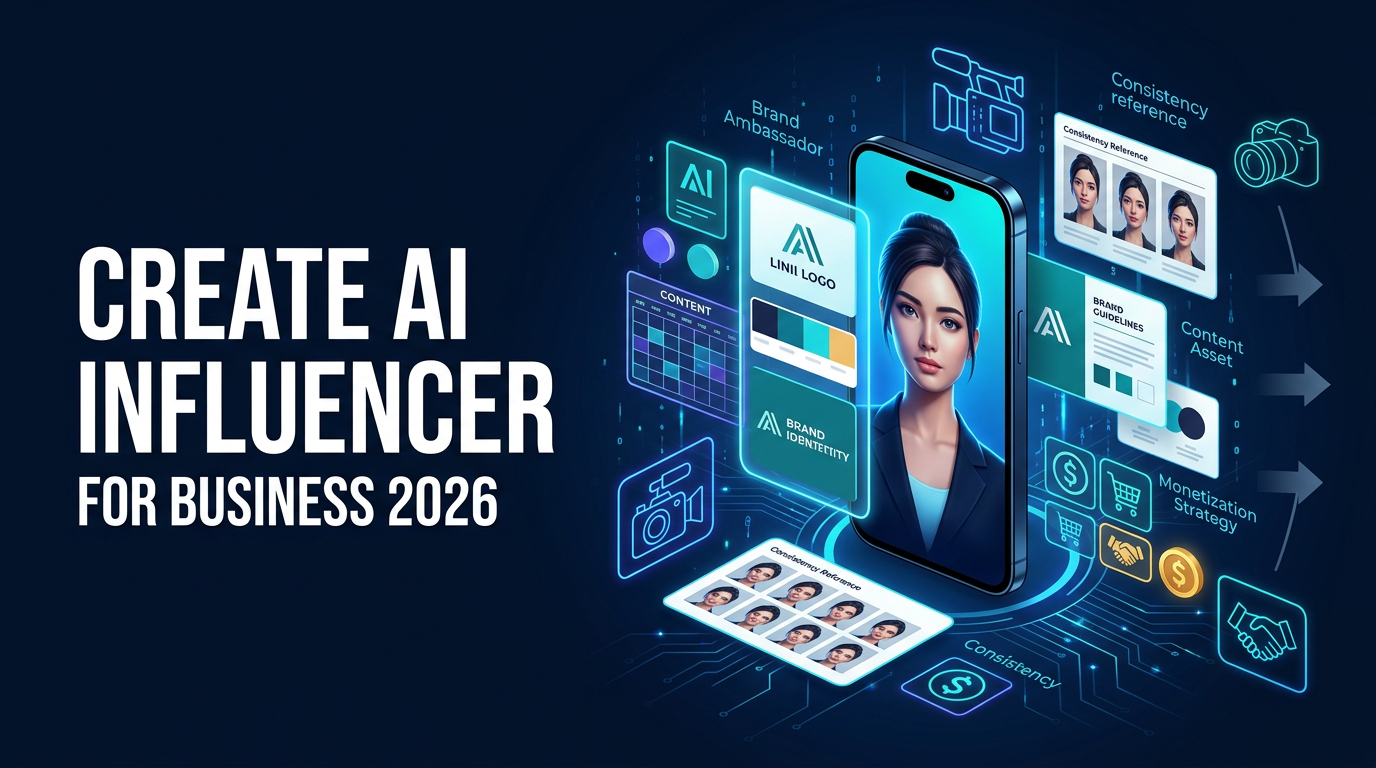
Almost anyone can generate an AI influencer today. A few prompts, a face, a name, and you have a digital persona. That is the easy part, and it is now essentially free. The hard part, the part that actually matters for a business, is building a virtual brand ambassador that stays consistent across hundreds of posts, represents your brand accurately, and earns the trust of an audience over time.
This guide is written for brands and founders, not hobbyists. It walks through what an AI influencer can do for a business in 2026, how to build one as a real brand asset rather than a one-off experiment, what it costs, and where the genuine difficulty lies. By the end you will understand why “generating” an AI influencer and “operating” one are two very different things.
Table of Contents
- What an AI influencer is, and what it is not
- Why brands are building them in 2026
- The seven building blocks of a brand AI influencer
- Consistency: the part that actually matters
- What it costs
- How AI influencers make money for a business
- AI influencers for e-commerce brands
- Setting realistic expectations
- Conclusion
What an AI influencer is, and what it is not
An AI influencer is a computer-generated persona, an avatar with a name, a look, a personality, and a content stream, operated by a person or a brand. Unlike a real influencer, it never sleeps, never goes off-message, and is fully owned by whoever runs it.
It is not a chatbot. A chatbot answers questions from a script. An AI influencer produces individual, crafted content, posts, images, videos, captions, designed to build a relationship with an audience. And it is not magic. Behind every convincing virtual creator is a real system of decisions about identity, voice, visual consistency, and publishing, run by real people.
That distinction is the whole point of this guide. The value is not in the generation. It is in the operation.
Why brands are building them in 2026
The influencer marketing industry has grown into a multi-billion-dollar market, and virtual influencers are now a recognized part of it. For a brand, the appeal is straightforward. A virtual ambassador is available around the clock, produces content on demand, carries no risk of an off-brand scandal, and belongs entirely to the business.
There is also a cost and control argument. Working with human influencers means negotiation, scheduling, and dependence on someone else’s behavior and availability. A brand-owned AI influencer removes that dependency. You decide what it says, when it posts, and how it represents your products. For companies that publish a lot of content, that control is worth a great deal.
None of this means human influencers are obsolete. Audiences still value real people, and trust in AI personas depends heavily on transparency. But as a complement to a brand’s content strategy, a well-run AI influencer is a serious asset in 2026.
The seven building blocks of a brand AI influencer
Building one as a business asset, rather than a quick experiment, comes down to seven decisions.
First, the niche and purpose. What is this persona for? Promoting your products, building reach in a topic, representing your brand voice? The clearer the purpose, the easier every later decision becomes.
Second, the persona. Name, personality, backstory, values, tone. This is what makes the difference between a generic face and a character an audience can connect with.
Third, the visual identity. The look that has to be recognizable across every single post. This is where most efforts fail, and we will come back to it.
Fourth, the content strategy. What kinds of posts, on which platforms, at what frequency, and how they tie back to the brand.
Fifth, the production workflow. The actual tools and steps to generate images, video, and captions repeatably, without reinventing the process each time.
Sixth, the publishing and interaction layer. How and when content goes out, and how the persona responds to comments and messages.
Seventh, the governance layer. A human review step before anything goes live, because the brand is fully responsible for everything the persona says.
Consistency: the part that actually matters
If there is one thing that separates a professional brand AI influencer from a throwaway experiment, it is visual consistency. An audience needs to recognize the same face, the same person, across every post and every scenario. Get this wrong and the illusion collapses, and so does the trust.
The naive approach, generating a new image from a text prompt each time, produces a slightly different person every time. The professional approach is to train a custom model on a set of reference images of the persona, so that every new generation renders the same character reliably, regardless of pose, setting, or outfit. This is the single most important technical decision, and it is the reason “anyone can generate one, few can keep it consistent” is the real story of 2026.
The same principle extends to video and voice. A consistent face that suddenly moves or speaks differently breaks the effect just as badly. Treating the persona as a trained, reusable asset rather than a series of one-off generations is what makes it usable for a brand.
Tip: Before committing to a tool or workflow, test consistency hard. Generate the same persona in ten very different scenarios, different lighting, angles, and settings, and check whether it still reads as the same person. If it drifts, the setup is not ready for brand use.
What it costs
The honest answer is that it ranges widely depending on ambition. At the entry level, the software subscriptions for image and video generation sit in the low tens of US dollars per month. That is enough to run a simple persona if you do the work yourself.
A more professional setup, with a custom-trained model for reliable consistency, higher-quality video, and voice, lands in the mid hundreds of US dollars per month in tooling, plus the real cost, which is time. The expensive part of a brand AI influencer is rarely the software. It is the ongoing work of strategy, production, review, and community management. That is exactly why many brands choose to have it built and run for them rather than assembling it in-house.
How AI influencers make money for a business
For a brand, an AI influencer pays off in several ways. The most direct is promoting the brand’s own products, a virtual ambassador that showcases what you sell, continuously and on-brand. For brands that build a persona with genuine reach, there are also sponsored partnerships with other companies, the same model that human influencers use.
Beyond that, AI personas open up affiliate revenue, branded merchandise, and audience-building that feeds the rest of the business. Reported earnings for top virtual influencers range from a few thousand US dollars per month to far higher for the rare breakout cases. The realistic takeaway for most businesses is not overnight riches but a controllable, scalable content and marketing asset that compounds over time.
AI influencers for e-commerce brands
This is where the concept gets especially practical. An e-commerce brand has a constant need for product content, lifestyle imagery, demonstrations, seasonal campaigns. A brand-owned AI influencer can produce that content endlessly, wearing or using the brand’s products, in any setting, without a photoshoot.
Picture a fashion or beauty store with a recognizable virtual ambassador who models new arrivals, answers common questions, and appears across the brand’s social channels and product pages. The persona becomes a unifying face for the brand, working around the clock at a fraction of the cost of continuous production shoots. For online stores that live and die by fresh visual content, this is one of the most compelling use cases of 2026.
Setting realistic expectations
A few honest caveats. Building a persona is quick, but building an audience that trusts it takes time and consistent quality, just like any brand presence. Transparency matters, audiences and, increasingly, regulators expect to know when they are interacting with an AI persona, so being open about it is both the ethical and the smart choice. And the technology, while remarkable, still requires skilled hands to look genuinely professional rather than obviously synthetic.
Treated as a long-term brand asset with real strategy behind it, an AI influencer is powerful. Treated as a get-rich-quick gimmick, it disappoints. The brands that win with it in 2026 are the ones that operate it seriously.
Conclusion
Creating an AI influencer is no longer the hard part. Operating one as a consistent, trustworthy, brand-aligned asset is. The difference comes down to the seven building blocks, and above all to visual consistency, a clear persona, and a human governance layer that keeps the brand safe.
For businesses, especially e-commerce brands, a well-run virtual ambassador is a scalable content and marketing engine that you fully own and control. The opportunity is real, and so is the work behind it.
If you want a brand AI influencer built and operated for you, as a real asset rather than an experiment, talk to us. We handle strategy, consistent production, and a safe review process so your persona represents your brand the way it should.
Related articles
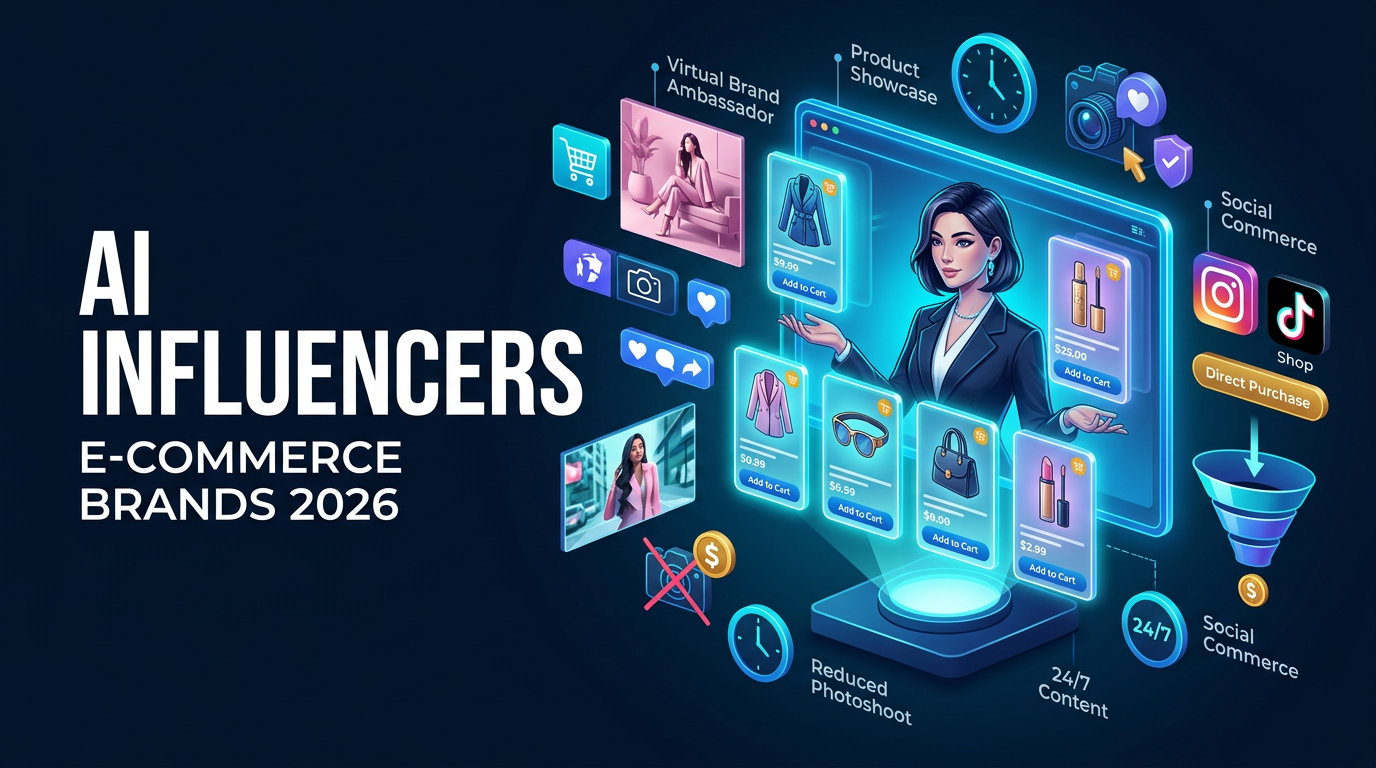
AI Influencers for E-Commerce Brands in 2026: A Virtual Ambassador for Your Products
AI influencers for e-commerce brands in 2026: how a virtual brand ambassador showcases products around the clock, cuts photoshoot costs, and drives social commerce.
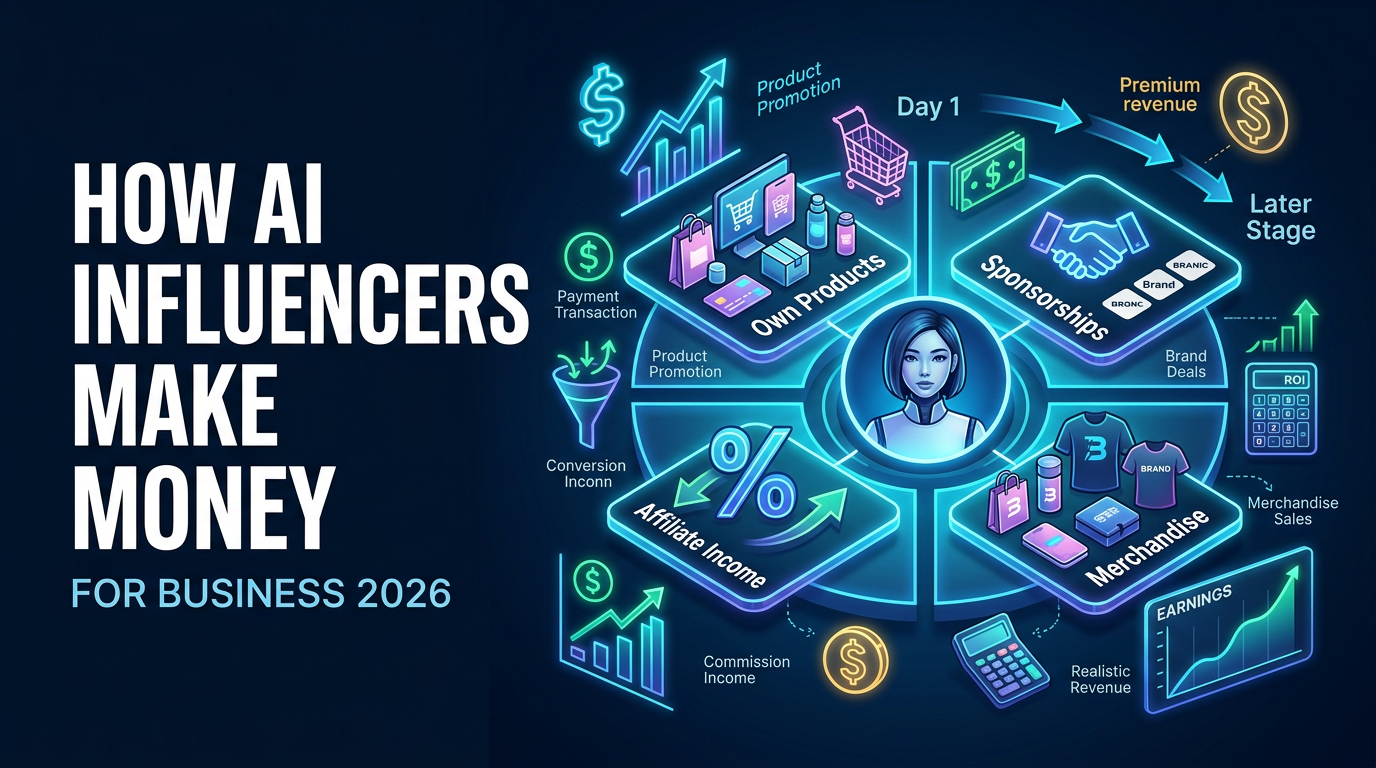
How AI Influencers Make Money for a Business in 2026
How AI influencers make money for a business in 2026: the real revenue streams, from promoting your own products to sponsorships and affiliate income, with honest expectations.
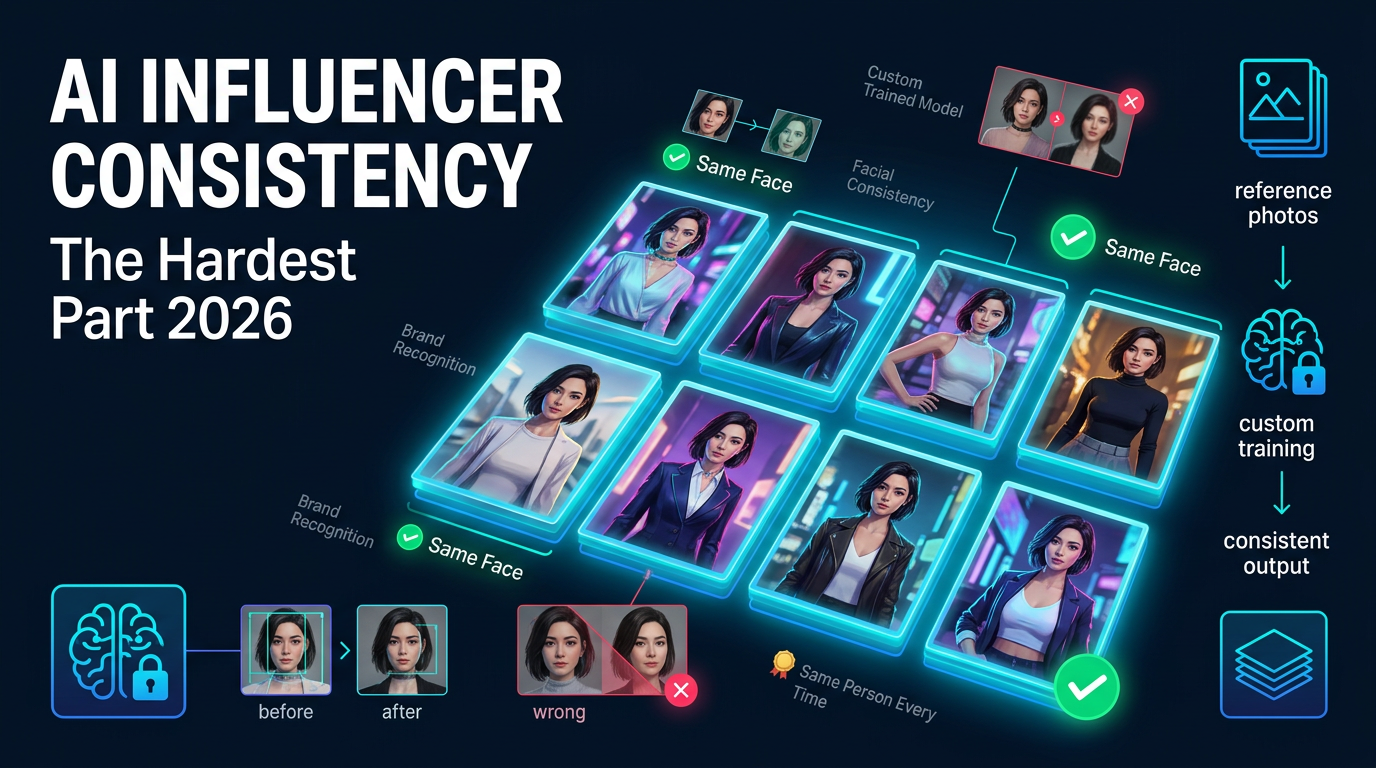
How to Keep an AI Influencer Consistent in 2026 (The Hardest Part)
How to keep an AI influencer consistent across every post in 2026. Why consistency is the hardest part, how custom-trained models solve it, and what brands should expect.